Showing posts with label Dana Andrews. Show all posts

Monday, November 9, 2015

Where the Sidewalk Ends (1950)

Image result for where the sidewalk ends 1950
“Your job is to detect criminals, not to punish them.”

            Happy Noirvember!
            Whenever I hear Film Noir I immediately think of Gene Tierney, Dana Andrews, and Otto Preminger. Yes, I immediately think of Laura, but the two actors and director made several Noirs. Besides the famous Film Noir, Tierney, Andrews, and Preminger had the looks and the style I associate with the stories typical of Noir. The actors and the director made another film together in 1950 called Where the Sidewalk Ends.
            Detective Mark Dixon (Dana Andrews) is always being complained about for being too rough with those he brings in. He has a bad temper and when no one listens to him he immediately beats them. Mark’s superior as downgraded him to second grade detective.
            At an apartment somewhere in town an illegal gambling racket is going on. At this apartment is a woman named Morgan Taylor (Gene Tierney). She is there with a guy named Ken. Morgan wants to go home she has work the next day. Ken gets furious with her and the guy running the gambling at the apartment, Tommy Scalise, block her from leaving. She realizes that Ken has brought her to the apartment as a bait to keep a rich man there gambling since she has become his lucky charm. Ken and the rich gambler get into a fight and Ken winds up killing the man.
            Mark is called to be a detective on the scene. Scalise has sent Ken and Morgan home. The apartment is clear of any other people. Scalise tries to cover up the fact that he had some gambling going on. Mark has some history with Scalise and immediately tries to pin the murder on him. Eventually Mark is given Ken’s name and tracks him down to an apartment. Ken is in the room and Mark gets frustrated with him quickly when Ken does not give him the information he is looking for. The two men get into a fight and Mark punches him too hard and kills him. Seconds after realizing he has killed a man a call comes through for Mark. The call is from his partner telling him to take it easy on Ken because Ken is a war hero. Mark realizes he is in a world of trouble. He calls a cab and walks out pretending to be Ken so as to make it look like Ken left the apartment. Before leaving Mark places Ken’s body under the stairs.
Image result for where the sidewalk ends 1950
            Morgan is eventually tracked down. Mark talks to her at her job. She reveals her and Ken had been married they separated a few months before. She went out with her ex-husband because she felt bad for him since he had been down on his luck. He had taken her out solely to be a decoy. After the interview Morgan takes Mark back to her apartment before they go out for dinner. Her father lives with her and turns out Mark had jumped in his taxi one night and had the father drive after someone. Mark gets a call at the restaurant that Ken’s body has been found and that Morgan’s father was seen at the apartment threatening to kill Ken if he does not open the door because Ken had hit Morgan.
            Now Mark tries to cover up his crime and pin the murder on Scalise. Of course Mark is arrested because this is a classic film and no one can get away with a crime in a classic film.
            I love Gene Tierney and Dana Andrews as a screen couple. They just looked so good together. Besides looking together, the types of characters they played, the rough detective and the nice woman who gives the detective a chance, just always worked with them. I feel that in some classic films when there is a rough or hardened detective and the nice woman who gives him a chance it does not work because it is so cheesy and the actors just do not do a good enough job making their roles good or believable. Tierney and Andrews made their characters believable and therefore made their characters work well together. Andrews had that tough look about him and Tierney had those soft beautiful features and way of speaking calmly. Hopefully part of what I just wrote makes some kind of sense. I am so used to seeing Gene Tierney and Dana Andrews together in Laura that seeing them in another film out of Laura is/was an experience and one I definitely enjoyed.
Image result for where the sidewalk ends 1950
            Otto Preminger is just a fantastic director. I like the way he filmed his actors. It was intimate but never lost the focus of the main story. Again I hope I made some sense on what I just wrote. Preminger’s direction to me never seems to have any frills to it, it always feels very straightforward and gritty and I really like that.

            Where the Sidewalk Ends is a good Film Noir. I liked how the anti-hero is in a way the bad guy of the story. Watching this I felt like I was not supposed to like the character of Mark because he was a brute and he had murdered someone after being told to knock it off with the beatings but of course he gets softened by the love interest aspect with Morgan and his wanting justice with Scalise. Where the Sidewalk Ends, I feel, is not a typical Noir or a typical classic film and for that I really like it. When I first watched Where the Sidewalk Ends a few years ago I was not too crazy about it and would not have suggested it as a Film Noir must see but now I do highly recommend it.
 Image result for where the sidewalk ends 1950

Thursday, March 28, 2013

Spring Reunion (1957)


I got so excited when I went through TCM’s schedule and found a film that starred Dana Andrews, Betty Hutton, and Jean Hagen called Spring Reunion. I did not care what the story was about I had to see it I adore all three actors to no end. As soon as the film started I immediately regretted having wasted room on my DVR to see it
            The Carson High School class of 1941 is celebrating its fifteen year reunion. At the beginning of the film we are shown four of the most popular students from that year. Maggie Brewster (Hutton) was the most popular, Jack Frazer was the football hero, Fred Davis (Andrews) was set to be the most successful, and Berna Forrest (Hagen)… well to be honest I forget what she was voted I could be getting she and Fred mixed up. Anyway… fifteen years later Maggie is working for her father at his real estate firm. She travels around the world with her parents and works very hard at her job. She has been helping the school set up for the reunion. Barna, or Barney as everyone calls her, comes in from another city. She is married with four kids and is as happy as can be to have a break them. Jack has been having a great time reliving his glory days playing high school football.
            Maggie has been trying to sell Fred’s father’s house. Fred has been out of town with all the arrangements being done over the phone. She goes over to his house to set up for a showing and Fred walks through the door. They surprise each other but seem incredibly happy to see the other. Fred tells Maggie he is having second thoughts about selling the house. He is waiting to hear from a possible job out in San Francisco. If he does not get the job out there he will stay in Carson City. Maggie gets mad at him because there is one potential buyer who is very interested in the house. However, her anger subsides and she asks Fred if he is going to the reunion. He had no idea it was taking place that night.
            That night, Fred shows up at the reunion. Maggie is very happy to him. When the reunion ends Maggie leaves with Fred with Barney and Jack tagging along.
            After this the rest of the film just falls apart. It was falling apart since the beginning but here it just crumbles.
            The cast of Betty Hutton, Dana Andrews, and Jean Hagen was great. I would have loved to have seen them in a much better film with a much better story. This was Betty Hutton’s last film. What a damn shame to see someone with so much talent and energy go out like this. Dana Andrews was good his character was a bit sketchy and dark but he did a good job. Jean Hagen was fabulous. The woman is not given enough credit for her acting. I wish she had been in more scenes.
            Spring Reunion is a classic film that should only be seen by fan of either Betty Hutton, Dana Andrews, or Jean Hagen. The story is terrible and just starts off boring.
 

Friday, January 27, 2012

Ball of Fire (1941)


“You’re the one I’m just plain wacky about”

            Ball of Fire is probably one of the most adorable films I have ever seen.  All the adorableness comes from Gary Cooper and a group of older gentleman actors. Now I am sure you must be thinking “Gary Cooper adorable?” Usually he is the quiet, stoic, handsome man in his films but let me tell you he is so cute and so sweet you will feel just like Barbara Stanwyck in the film and fall completely in love with him.
            For the past nine years Bertram Potts (Cooper) has lived a very strict academic life. He and seven other professors have been working on an encyclopedia. Each professor has a specialty with Potts’s being grammar. They all go to bed at nine and are taken care of by a maid/live in nurse who does all the house work. One day the garbage man comes in looking for answers to a quiz game he can get some money from. The garbage man speaks modern slang which none of the academicians understands. Potts feels like he should known this slang if he is an expert in grammar so he decides to go out and write down as much slang as he can.
            One of the places Potts visits is a nightclub. Singing at the club that night is Sugarpuss O’Shea (Stanwyck). He wants to speak to her about the slang she used in the song but she tells him no, she really has no interest in him but he gives her his card anyway. Sugarpuss has a big issue at that moment: her boyfriend Joe Lilac (Dana Andrews) is wanted in connection of a murder and they want to question her. Two of Joe’s goons are sent to get her out of town. She looks down at the card and decides the best place where no one will look for her is at the professors’ home.
            When Potts arrives home the other professors are waiting for him. He tells them he is confused about all the slang he has picked up he cannot understand how odd words stand for a correct term. In the middle of the conversation the doorbell rings. Potts answers it and Sugarpuss is standing in the doorway. She tells him that she does want to be a part of his research. He says she is too early but the other professors are more than willing to give up their rooms for her.
            The men love having Sugarpuss around. She teaches them dancing and keeps them on their toes. The only person who does not like her is the maid she says that Sugarpuss is a wicked girl and she will not stand for her anymore. Potts is sent to get rid of her but since she is wanted she cannot leave so she tells him that she is madly in love with him and kisses him! Needless to say Potts lets her stay.
            Joe sends two men over to Sugarpuss. He sends along a ring as part of a proposal so that Sugarpuss will not have to testify against him. Unfortunately on the same day Potts proposes to her as well. Sugarpuss feels terrible because she knows that she cannot marry him. Joe calls her saying that he is her “daddy.” Thinking that Joe is really her father Potts talks to him. Joe gets him to ride down to New Jersey where he is hiding out so Sugarpuss can get out of New York.
            While on the way to Jersey Sugarpuss really sees how much Potts loves her and refuses to marry Joe.
            There is an obstacle than we all know that Cooper and Stanwyck get together in the end.
            I do not even know where to begin on describing how cute Gary Cooper was. He was adorable but also incredibly sexy at the same time! The character was so sweet and innocent which made the film so much fun to watch. His best scene is at the end when he goes to fight to Joe for Sugarpuss. He fights like one of those boxers with their one fist far away from them and bouncing back and forth. I was cracking up. Barbara Stanwyck is her usual wise cracking tough girl self. Even though Stanwyck played a tough girl all the time it never got old with her because she was so good and so convincing… maybe it is her real New York accent that makes her tough girl work so well over and over. Sugarpuss is one of Howard Hawks’s most beautiful fast talking tough girls, without Stanwyck as the character Sugarpuss would have seemed annoying and cheap. Stanwyck was wonderful playing comedic roles she was nominated for an Academy Award for this film which just proves how talented she was. Dana Andrews was great as the bad guy. I am so used to seeing him as the good guy but he was totally believable as a gangster he had the perfect look and attitude.
            The seven other professors were so sweet. They were modeled on the Seven Dwarfs, they all had their little quirks being too smart for their own good but completely innocent. All the professors were in love with Sugarpuss they looked at her as if they were little boys in love but also as a daughter.
            Ball of Fire was written by Charles Brackett and Billy Wilder with the story written by Wilder. The pair’s fast paced dialogue combined with Howard Hawks’s fast paced direction is perfection. Gregg Toland the famous cinematographer of Citizen Kane did the cinematography for this film. There were some scenes where I thought the cinematography was familiar with the deep focus and once I realized it was Toland’s work I knew why the few scenes were familiar.
            Edith Head designed Barbara Stanwyck’s costumes. I liked all of her costumes in this film. The one costume I like was when Sugarpuss tells Potts that she loves him so he would let her stay in the house. It is very 1940s with the limited material and belt along with a chain at the belt as an accent.
            Even though I think Ball of Fire is one of the most adorable films I have ever seen I had a bit of a hard time sitting through it. It took three sittings for me to finish it. At times all the cuteness and sweetness and all the 1940s slang (especially that) gets way too much. This is not too many people will enjoy unless they are fans of 1930s-early 1940s Screwball Comedy. Besides some slow moments and the slang I enjoyed Ball of Fire. 

Thursday, January 12, 2012

Belle Starr (1941)


“Stealin' what's yours ain't stealin'.”

            Gene Tierney is one of my favorite classic actresses. Not only was she outrageously gorgeous she was incredibly talented. I have watched a lot of her films and up until Belle Starr I had yet to see her in a bad film where her acting was horrendous. But that the entire blame for this film being bad cannot be placed upon Tierney it was not a good film in general.
            The story takes place after the Civil War. Since her father was killed by Yankees and her brother was fighting Belle (Tierney) ran her family home herself along with her mammy. Her brother Ed comes home as well as his friend Maj. Thomas Crail (Dana Andrews) who fought for the north. Thomas likes Belle and she likes him but she cannot forgive the Yankees for what they did to her father.
            In town she sees Thomas has put up a notice for the capture of a bandit named Sam Starr (Randolph Scott). Belle sticks up for him saying that he is protecting Missouri from Yankees and carpetbaggers who are undesirable to the south. A man sitting by hears this, he is one of the men in Sam Starr’s gang and he relays what Belle has said to the leader. That night Sam comes to Belle and Ed’s house while Thomas is there. He and his gang tie up Thomas but before they can get away from the chase by the soldiers Sam is shot. Belle takes him into the house to take care of him. When Thomas finds out he has to bring Ed to jail and burn their house down.
            Along with one of the men Belle gets her brother and Sam out of jail. She has had enough of the Yankees and the carpetbaggers so she joins with Sam to keep them out. As time goes on they marry and there is a manhunt and reward out for them. Belle does not care about what they do just as long as she feels she is doing something right for her state and the south. Ed comes to try to talk some sense into her. He gets through to her even though she does not want to hear it. On his way back to town he is shot by two men who did not know that Ed was Belle’s sister. Belle takes Ed’s words to heart now that he is gone.
            Sam wants to hold a raid on the town when he finds out the governor is coming. Belle’s mammy finds out that the notice is fake and that the town’s people are planning to capture Sam. She warns Belle and Belle tries to warn Sam but he will not listen. He goes into town anyway and she tries to stop him.
            So the plot is not too bad if the lead had been acted by someone else and the Technicolor was not so god awful it would not have been bad. As I said I adore Gene Tierney she was a great actress but in Belle Starr she was twenty-one and just really starting out. She overacted so horribly to the point where it was embarrassing to watch sometimes. The Technicolor did not help any with the look and feel of the film. Tierney’s close up were ghastly they made her look like she had way too much cover-up on her face giving her an orange tint. The copy that I saw looked like it was not restored so that could possibly be the problem but still it looked terrible.
            Dana Andrews and Randolph Scott were not bad they were the only good actors in the whole film. Andrews did look pretty ridiculous though with his mustache and did not look good in a Civil War uniform at all.
            Belle Starr felt like it wanted to be a shorter version of Gone with the Wind: they had a tough chick who wanted to get back at the Yankees for ruining her way of life, the girl was very pretty, and two men were in love with her and neither was good for her. The film falls flat in so many ways it is not worth watching unless you are a big Gene Tierney fan. 

Thursday, September 22, 2011

The Best Years of Our Lives (1946)

“You know, I had a dream. I dreamt I was home. I've had that same dream hundreds of times before. This time, I wanted to find out if it's really true. Am I really home?”

“I dreamed I was gonna have my own home. Just a nice little house for my wife and me out in the country... in the suburbs anyway. That's the cock-eyed kind of dream you have when you're overseas.” 

           
            Last summer I went to England for a month as part of a study abroad program.  I missed home a lot I really missed my brothers and my parents I emailed them and my grandparents every day. What really hit me and made me miss them even more was when I visited the Imperial War Museum. The museum really struck a nerve in me because I kept thinking after seeing and learning about all the fighting the British soldiers and men all over the world and women as well did put things in perspective. I visited the museum twice and each time I thanked God that I knew I was going to see my family in a few weeks times but I could never help feeling guilty when I knew for certain that I would be back home with my family. I felt guilty because so many service men sacrificed their lives even the ones who did return home sacrificed so much of themselves for their country, they missed their families and their families missed them and they never knew when they were going to see each other there was no certainty for them like there was for me. I cannot even tell you how bad I missed my family after seeing the museum’s Holocaust’s exhibit and there was this one recorded interview with a prisoner from Auschwitz who said that she could have imagined life without her brother if she had to but she could never live her life without her mother. But again that experience in that exhibit definitely put things in great perspective and again made me feel a bit guilty.
            As I said I was only away for a month and it was tough it was the longest I had ever been away from home but I cannot even begin to imagine how the men fighting in the European and Pacific Theaters of war felt being away for years at a time. William Wyler in is 1946 film The Best Years of Our Lives tells the story of three servicemen returning to their small hometown after the war.
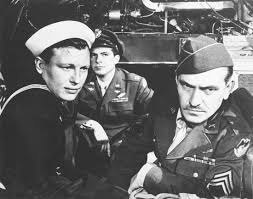
            Al Stephenson (Frederic March), Fred Derry (Dana Andrews), and Homer Parrish return to their small hometown. Homer is the youngest he lived with parents before the war and had a girl named Wilma. He is at first excited to see home but once he is there he is unsure of how he will be looked at. Homer lost his hands when his ship he was serving on was hit. His parents are happy to see him and so is Wilma but he cannot hug her back. Al is next to go home. He returns home to his wife Milly (Myrna Loy), his daughter Peggy (Teresa Wright), and son. His wife and children are all more than happy to see him. Fred returns to his parents’ home where he expects to find his wife but they say she moved into her own apartment. When he gets to her place she is not there.

            That night they all run into each other at Homer’s uncle’s place Butch’s. Al wanted to go out so he dragged Milly and Peggy all over town from one bar to the next. Fred is a mess because he cannot find his wife. Homer is upset with the way his family treats him and looks at his hands he says they look guilty because they have hands and he does not. Fred is so drunk that Milly and Peggy wind up putting him in the back with a drunken sleeping Al and taking him to their place for the night.
            The rest of the film tells how each one adjusts to be home again dealing with their new surroundings and the changes that have happened to their families. The film is so amazing I do not want to say anymore about it than what I have already written.
            I may have said many of the films I have seen are perfection but with The Best Years of Our Lives I sincerely mean this the film is just perfection in every single way. Unlike today where every film and TV show wants to get things down to the nitty gritty real life issues of the world in 1946 the real life and its issues was not really shown. Al, Fred, and Homer were three men rehabilitating to being back in their old lives that had dramatically changed while they were away: Homer with his hands, Al with his children all grown up and now he is drinking heavily, and Fred with a wife that pretty much just married him for a thrill and expected that thrill to return when he did and she cannot understand how he suffers mentally when he has his PTSD dreams at night. Many people in Hollywood felt Sam Goldwyn was crazy for doing a story such as this since it was so real.
            Goldwyn and Wyler went for broke on the realism by having the role of Homer Parrish played by a real war veteran named Harold Russell who lost his hands in boot camp in an accident. Wyler wanted the clothing to be realistic so the designer went out to shops and bought clothes instead of making them herself. Each room was made smaller than normal for film sets. The story is based off an article that Goldwyn and his wife had read in Time about returning servicemen that was then turned into an original story by MacKinlay Kantor and written as a screenplay by Robert E. Sherwood. The realism just adds so much of to the film it makes the characters and story more moving, sympathetic, and heartfelt. I can see why the film was so highly praised when it was released because so many people could absolutely relate to what the characters were feeling and going through.
            The cast is one of the greatest I have ever watched in a film. Much of the great acting credit goes to Dana Andrews, Frederic March, and Myrna Loy. The more I see of Andrews the more impressed I am with him and the more I see how versatile he is. Besides Homer, Fred was the most realistic character of the whole story and Andrews just knocked his performance out he was so good. March was great especially when he was in scenes with Loy because they were both knew what they were doing and were seen as great actors even by this time. Wyler stated “When… you work with two people like Freddy March or Myrna Loy, a director might improve their work, but he certainly can’t make a performance because they are too knowing.”
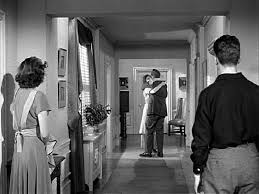
 

            Myrna Loy gets top billing even though her part is small because she was the most successful female star of the time. At first she was afraid to take the role because she had heard that Wyler liked to do many takes and could be tough but once filming started they became good friends. What I want to know is why Ingrid Bergman can win years later an Academy Award for her role in Murder on the Orient Express when her only big scene was five minutes long and Myrna Loy cannot even be nominated and she had more screen time (nothing against Bergman she was fabulous in that role this is against the Academy). Milly’s role in the story had originally been smaller but once the film got moving and Loy was cast the role expanded. Loy tells in her autobiography that Goldwyn pitched the role to her pretty hard because it was small but she said she liked the story and would have taken it no matter what. This is just one of the many roles why Myrna Loy as the reputation as the perfect wife because she played the perfect wife like no one else could. Her facial expressions and mannerism are unequaled. Years later Wyler was amazed how in one scene Loy actually cut out one of her lines for the sake of a good scene and praised her for her intelligence for choosing a picture instead of a part. Loy made her part bigger than it was because she was just good.
            I could go on and on about Myrna Loy in her part because whatever praise she was or is given she deserves it.
            There are so many fantastic scenes it is hard to pick just one. Peggy and Milly drop off Fred at his wife’s place but she does not answer and he falls down drunk and sleeping. The two women pick him up and put him in the back with Al. Fred puts his arm around Al and Al takes his hand and Milly says “They make a cute pair” (something along those lines). When they get back Milly puts Al to bed dressing him and tucking him in. She tries to get him on his back so he will not snore and his arm in under him so she takes his arm and flips him over. The next morning Milly brings Al breakfast in their room and he just takes her and they kiss (Teresa Wright excellently explains her feelings towards the scene: “To me their scenes still stand as the epitome of married love on the screen. You can take all the erotic pictures of the world and they won’t compare with the bedroom scene the morning after. She brings that breakfast tray in and he looks at her and sets it aside. It’s a marvelous moment because you’ve seen them the evening before dancing and coming together with the beautiful subtle things that both of them did. What’s being felt and played underneath is exciting”). The one scene I found very moving is when Homer has Wilma come up to his room when he about to go to bed. He has been telling her to let him go because he himself cannot cope with his hands and he does not want to burden Wilma. After he takes his hands off and she buttons his pajama top he finds that she still loves him and wants to be with him no matter what.
            William Wyler shot the film so wonderfully and so raw. There are so many scenes that were filmed so brilliantly. In several shots he used deep focus and these were greatly enhanced by Gregg Toland’s Academy Award winning cinematography. If you have seen Citizen Kane you know how incredible Toland’s cinematography is.
            The Best Years of Our Lives won the Academy Award for Best Film in 1946. The film’s depiction of real issues of America and servicemen returning home after war was never seen before. Private issues like PTSD and alcoholism as an after effect of war were never shown before and were a taboo subject. By this time Americans did not want to see rich people fluttering around society and worrying about their rich love problems they wanted to see people like them who had lost someone or something and saw the world as not all butterflies and rainbows with happy endings. The Best Years of Our Lives appealed to the common viewer they could connect in some ways to the characters. The film was so popular it became the biggest success since Gone With the Wind and is today ranked number thirty-seven on AFI’s Top 100 Greats Films.
            The best and one of the worst times in American history was during World War II. During this time everyone came together to help out one another and everyone was patriotic. The Best Years of Our Lives captures the American dream, the American life, and when we really feel like it the American way of coming together and helping out others. The film tells the story of returning men struggling and coming to terms with what they went through but also knowing that with someone to love them and care for them they can survive and get through life. Al, Fred, and Homer also know that they each share a bond that will last and that bond will keep them friends for the rest of their lives.
            Do not miss out on any opportunity to see The Best Years of Our Lives. 

Wednesday, June 15, 2011

Daisy Kenyon (1947)


“It's a funny thing about being in love. Sometimes it's easier to tell when you are than when you aren't”

            I am not even sure how to begin this post about the Noir film Daisy Kenyon. This is one film that I am really on the fence about.
            The two main things I look for when watching a film are the story and the acting. With Daisy Kenyon I felt the story was not that good and that it dragged but the acting was some of the best I have ever seen in a film.
            Daisy Kenyon (Joan Crawford) is a commercial artist who works for a magazine. She is seeing a man named Dan O’Mara (Dana Andrews). Dan is a big lawyer who is married with two girls. Daisy and Dan often fight but they never stay angry at each other long. Daisy is also seeing another man a soldier named Peter Lapham (Henry Fonda). Peter fought in Europe during WWII. He is also a widower who lost his wife in a car accident.
            Both men offer a life Daisy must choose between. Dan promises he will divorce his wife but she does not want him to do that especially because of his girls. Peter does not have any strings attached and she sees he is a better guy than Dan.
            Daisy marries Peter but they both realize they still have to get over their former loves. Until they can work out their feelings there is no real love between them. Peter even admits that he moved into Daisy’s life when she was vulnerable and he took advantage.
            One day Dan calls Daisy from his home office. His wife, Lucille, picks up the phone to see who he is talking to. Dan is telling Daisy that he loves her. Lucille cannot take anymore and she yells into the phone at the other woman. Lucille wants a divorce and she wants to make it nasty by claiming Daisy as the reason for it.
            The story is a bit better than I described but I really could not get into. The film is labeled as a Noir but the only way I found it to be a Noir was because of the lighting and Otto Preminger directed it. Preminger is one of my favorite directors. I like how he was able to get down to the grittier aspects of life and portray things other directors were unwilling to portray. In the film there were issues of abuse from Lucille against her youngest daughter; Daisy was the “other woman” but she was the one we felt bad for not the other way around, and many other aspects. I am always in awe whenever I watch a Preminger film in how he brilliantly captured shadows. The cinematography in his films always amaze me. The cinematography I noticed really created a great amount of sympathy and compassion for Daisy.
            The story to me was just not that strong. Joan Crawford commented “If Otto Preminger hadn’t directed it, the picture would have been a mess. It came off. Sort of.” I have to agree with Crawford. Preminger turned a melodrama into something with a bit of intrigue.
            Crawford, Dana Andrews, and Henry Fonda worked very well together. Crawford gave a great performance for not really thinking anything of the film. I found she handled her character very well. I have not seen Crawford in many films so I was very impressed with her acting. Andrews I have only seen in Laura and Where the Sidewalk Ends where he is the nice guy with a little bit of toughness and sarcasm to him. Here I found myself wanting to punch him in some scenes. Dan was the kind of guy who just wanted everything. Since I am so used to him being a nice guy I liked Andrews being a bit of a slim. He pulled of this role very well. Fonda is just amazing in whatever film he is in but I was not liking his character. I found his loneliness and want to be really annoying in some scenes. I got a kick out of seeing Peggy Ann Gardner as Dan’s oldest daughter Rosamund. I am so used to seeing her in Black Widow when she was twenty-two years old it was interesting seeing her at fifteen.
            Daisy Kenyon has an alright plot but after a while it started to get on my nerves a bit. I only really kept watching the film because I was enjoying the acting. I am not going to completely write off Daisy Kenyon it is not an awful film but the story is not one of the greatest.
            I say give Daisy Kenyon a try. You may like it more than I did.