Friday, June 17, 2011

Lucky Partners (1940)


Good Luck!

            Lucky Partners has a cute premise: a man walking along one morning wishes his neighbor good luck. The two do not know each other he just says the term out of kindness. That day the girl has a lot of luck. Pushing her luck so to speak she plays a sweepstakes but she wants to go in on it with the man just so she knows she is not going crazy.
            The man is David Grant (Ronald Colman). He is a nice charming older man who lives across the street from a book store. He wishes Jean Newton (Ginger Rogers) good luck who just so happens to work in the book shop with her Aunt Lucy (Spring Byington). The deal is if they win Jean takes her half so she can get married to her fiancé Freddie (Jack Carson). David wants to take Jean on a proper honeymoon which will be strictly platonic. He can see that she is not really into the idea of marrying Freddie so he wants to give her a nice time before she just settles.  
            Like most classic Hollywood romantic comedies it is a case of boy meets girl, boy gets girl, then boy loses girl over some misunderstanding, and then before the end boy gets girl back. The film started off well but by the middle when Jean and David go on their platonic honeymoon it gets a bit boring. Colman and Rogers work well together. If you just look at their characters being friends and not really lovers the age difference is not a big deal- Rogers was twenty-nine and just coming off of her films with Fred Astaire and into many of her best films of the forties and Colman was forty-eight years old. The end of the film I found a mess. Somehow all three characters, David, Jean, and Freddie wind up in court. I pretty much hate courtroom scenes in comedies (and almost all films for that matter) because I think they are annoying and sloppy. To end a film and get the characters back in each other’s graces in a courtroom is just not my cup of tea.

            The acting was not that bad. Rogers I felt was holding back. She was cute and as always had perfect facial expressions but there was something missing with her character (maybe there was just something missing with the whole film). Maybe it was the fact that she was supposed to have some kind of feelings towards David. That could even be the problem with Colman and his character. I had never seen Colman in a film before Lucky Partners but I really liked him. He was such a gentleman with a great speaking voice. I have got to say I would love to find a man today who was a gentleman like he was and knew how to be polite with women (can I name this want as the “William Powell Syndrome”? Ever since I started watching The Thin Man and became a fan of Powell I wish I could meet a gentleman like him or any other classic actor similar to him). Jack Carson I can always take or leave him. He was a character actor who usually plays the same kind of tough guy who is being taken for granted and wants to fight someone off. Gone With the Wind fans may get a kick out of seeing Harry Davenport aka Dr. Meade as the judge at the end.
            Lucky Partners is not a bad film. The whole time though with Ginger Rogers I kept thinking of her as Roxie Hart for some reason and that film was not made until the following year in 1941. Especially in the courtroom scene I just wanted her to start chewing her gum and be silly (I probably started thinking of Roxie Hart when Rogers said “certainly” almost like she did in Roxie which never fails to make me laugh hysterically. Also Spring Byinton was in Roxie as well that could also be why). As I said there is something missing with this film. Rogers seemed to be holding back which I felt if she had not that the something that was missing would have been there. The plot is cute at the beginning but it gets lost by the middle.
            Suggestion: watch Lucky Partners if you like Ginger Rogers or Ronald Colman. Other than Rogers and Colman, David might as well have been saying “good luck” to us as the audience as we sit through the film.
           

Thursday, June 16, 2011

Today We Live (1933)

Today We Live, Gary Cooper, Joan Crawford, 1933
Today We Live is based off a book by William Faulkner of the same title. Faulkner himself even wrote the script. There are certain points of the film that are questionable from the acting, writing, and editing but the story holds up pretty well.
            The film takes place during The Great War in England and France. Richard Bogard (Gary Cooper) has traveled from America to England to take over a house from an English family named Boyce- Smith. Before he arrives at the house the man’s daughter Diana (Joan Crawford) has received a letter from the War Office letting her know her father was killed in action.
            Diana’s brother Ronnie (Franchot Tone) and their best friend Claude (Robert Young) have joined the Royal Navy. This seems to strike a nerve with Diana since her father has just died. All three are extremely close and have been since childhood. Claude has loved Diana for a long time and asks her to marry him. She says yes and then the two men have to leave for duty.
            A while later during a bike ride together, Bogard professes his love to Diana. She tells him he loves her too. Also on the bike ride Bogard decides it is time for him to join the war. After that Diana has joined an ambulance corps to be near Ronnie and Claude.
            Diana never gets over her love for Bogard even though she is engaged to Claude. She has told her brother about her feelings for the American. Unfortunately they receive a letter stating that Bogard died in a training accident. But Gary Cooper is the headlining actor so you know his character is not really dead.
            One day Bogard takes Claude out on a flying mission where the British soldier takes out a few German planes. The next night Claude and Ronnie take the American soldier on a torpedo mission in the Channel. Claude gets hit by a bullet in the head but he survives and is only blinded.
            By this time in my short review you should know that even though Diana is engaged to Claude she and Bogard wind up together somehow in the end and I’m pretty sure if you have seen enough films you may know what happens to get them together.
            I was not a fan of the story. From my bit of research on the film I found out that the play did not include a woman. The reason a woman was put into this story was because MGM wanted to put Crawford into another film.  It was just about men fighting in the Great War not about a love triangle and a woman suffering from worry. The dialogue was not written very well by Faulkner. The characters are supposed to be British they were not meant to be played by the wholesome image Americans. The dialogue is choppy to try to make it sound British but it just makes the characters look unintelligent and nervous when they speak. Crawford, Tone, and Young were the British characters. Crawford was the only one to pull of some sort of British-ness the best.
            What really made some scenes odd was the editing. Apparently the original running time was 135 minutes and was then trimmed to 113. You can clearly see where the editors went to town. Out of nowhere after only talking to each other briefly in the house and on a very short bike ride Bogard tells Diana he loves her. At first I was totally confused and worried that the copy of the film I had was crap and skipped a scene (figured it was what I got for downloading it). But that was not so it was the editing. That bit taken out just made the “love” between Diana and Bogard so unbelievable. But I got to say that the chemistry between Crawford and Young was not believable either.
            Since the script was stiff the acting was a bit stiff by the four leads but they still managed to do decent jobs. Crawford was excellent. Her character needed to do a kind of silent suffering or a held back suffering and she played it perfectly I did not feel she over acted at all. Cooper was good. To me he was the gentleman who had a bit of a toughness to him but he was not afraid to be a bit soft. He and Crawford worked well together but I think they could have been fabulous together if they had made a better film. As for Tone and Young I liked them. Tone was good as the protective older brother with Diana as well as a bit with Claude. Young was the little boy who really loved Diana but he did not go over the top with that kind of character. He was sweet but still knew how to be man. The scene when he was flying with Bogard and Bogard’s friend was really funny.
            Howard Hawks directed Today We Live. Hawks did the best he could with the story and he made the plot and the characters less boring. He just had a great touch with his films he was always able to get the best out of actors and the characters they played. The plane and boat scenes were excellently directed.
            Famed MGM costume designer Adrian created the pieces for Crawford. Right from the moment we see Crawford the woman is not dressed for 1916. She is wearing modern 1930s, Art Deco, whimsical clothing. All I can complain about the clothing was that it was not correct for the 1920s but I love Adrian’s clothing and 1930s fashion so I was able to look past that issue.
            Since Today We Live was made in 1933 a year before all the codes were enforced on films Faulkner and MGM were able to keep a risqué piece of action and dialogue in the film. After a long night at the hospital Diana comes home to find Claude waiting for her on her doorstep. He is a bit drunk but she does not want him to be left alone outside. The next day they tell Ronnie that even though they are not married they slept together. Ronnie does not have an issue with what they did he said he knew they had. One of the MANY reasons why I love pre-code films.
            With its faulty bits in the editing and the dialogue Today We Live is not a bad film. It is not one of the greatest but it is not horrible. The actors all work great together and Howard Hawks’ direction is as always very well done.
            My Suggestion: See it if you can find it (available on DVD)

Wednesday, June 15, 2011

Daisy Kenyon (1947)


“It's a funny thing about being in love. Sometimes it's easier to tell when you are than when you aren't”

            I am not even sure how to begin this post about the Noir film Daisy Kenyon. This is one film that I am really on the fence about.
            The two main things I look for when watching a film are the story and the acting. With Daisy Kenyon I felt the story was not that good and that it dragged but the acting was some of the best I have ever seen in a film.
            Daisy Kenyon (Joan Crawford) is a commercial artist who works for a magazine. She is seeing a man named Dan O’Mara (Dana Andrews). Dan is a big lawyer who is married with two girls. Daisy and Dan often fight but they never stay angry at each other long. Daisy is also seeing another man a soldier named Peter Lapham (Henry Fonda). Peter fought in Europe during WWII. He is also a widower who lost his wife in a car accident.
            Both men offer a life Daisy must choose between. Dan promises he will divorce his wife but she does not want him to do that especially because of his girls. Peter does not have any strings attached and she sees he is a better guy than Dan.
            Daisy marries Peter but they both realize they still have to get over their former loves. Until they can work out their feelings there is no real love between them. Peter even admits that he moved into Daisy’s life when she was vulnerable and he took advantage.
            One day Dan calls Daisy from his home office. His wife, Lucille, picks up the phone to see who he is talking to. Dan is telling Daisy that he loves her. Lucille cannot take anymore and she yells into the phone at the other woman. Lucille wants a divorce and she wants to make it nasty by claiming Daisy as the reason for it.
            The story is a bit better than I described but I really could not get into. The film is labeled as a Noir but the only way I found it to be a Noir was because of the lighting and Otto Preminger directed it. Preminger is one of my favorite directors. I like how he was able to get down to the grittier aspects of life and portray things other directors were unwilling to portray. In the film there were issues of abuse from Lucille against her youngest daughter; Daisy was the “other woman” but she was the one we felt bad for not the other way around, and many other aspects. I am always in awe whenever I watch a Preminger film in how he brilliantly captured shadows. The cinematography in his films always amaze me. The cinematography I noticed really created a great amount of sympathy and compassion for Daisy.
            The story to me was just not that strong. Joan Crawford commented “If Otto Preminger hadn’t directed it, the picture would have been a mess. It came off. Sort of.” I have to agree with Crawford. Preminger turned a melodrama into something with a bit of intrigue.
            Crawford, Dana Andrews, and Henry Fonda worked very well together. Crawford gave a great performance for not really thinking anything of the film. I found she handled her character very well. I have not seen Crawford in many films so I was very impressed with her acting. Andrews I have only seen in Laura and Where the Sidewalk Ends where he is the nice guy with a little bit of toughness and sarcasm to him. Here I found myself wanting to punch him in some scenes. Dan was the kind of guy who just wanted everything. Since I am so used to him being a nice guy I liked Andrews being a bit of a slim. He pulled of this role very well. Fonda is just amazing in whatever film he is in but I was not liking his character. I found his loneliness and want to be really annoying in some scenes. I got a kick out of seeing Peggy Ann Gardner as Dan’s oldest daughter Rosamund. I am so used to seeing her in Black Widow when she was twenty-two years old it was interesting seeing her at fifteen.
            Daisy Kenyon has an alright plot but after a while it started to get on my nerves a bit. I only really kept watching the film because I was enjoying the acting. I am not going to completely write off Daisy Kenyon it is not an awful film but the story is not one of the greatest.
            I say give Daisy Kenyon a try. You may like it more than I did.

Tuesday, June 14, 2011

AFI's Top 25 Greatest Actors

For AFI’s top 25 greatest actors I do not have that much of an issue with the chosen actors. My only issue is the ordering and James Dean being on the list.
           
            The Top 25 Greatest Actors as chosen and seen on AFI’s website:
1. Humphrey Bogart
2. Cary Grant
3. James Stewart
4. Marlon Brando
5. Fred Astaire
6. Henry Fonda
7. Clark Gable
8. James Cagney
9. Spencer Tracy
10. Charlie Chaplin
11. Gary Cooper
12. Gregory Peck
13. John Wayne
14. Laurence Olivier
15. Gene Kelly
16. Orson Welles
17. Kirk Douglas
18. James Dean
19. Burt Lancaster
20. The Marx Brothers
21. Buster Keaton
22. Sidney Poitier
23. Robert Mitchum
24. Edward G. Robinson
25. William Holden


            Issue number one is the ordering. Really, Fred Astaire is at number five above Henry Fonda, Charlie Chaplin, James Cagney, Spencer Tracy, and Gable? Astaire was the greatest dancer ever to be on film he was a genius beyond words but as far as acting he was not good by any means. His acting never stretched his acting he was always the love sick little boy chasing after the younger girls. The same actually goes for Gene Kelly he was an amazing dancer and singer but as far as acting went he needed some help. There are many actors I feel are ordered on the list because of their iconic status. With the actors I really feel that many of them were not good actors and are ordered the way they are because they are legends. Gable is a legend he was not the best actor to grace the screen he was masculine, rugged, and handsome and definitely knew how to give great smoldering looks.
            Issue number two is with James Dean. I have seen the guy in a few films and I did not like his acting at all. I understand he was part of a new group of young actors and he was handsome. Dean had great appeal to his era but I cannot see it.
            I could have made the list here is how I would have the actors ordered:
1.      Cary Grant (The man was so versatile. Grant could play comedy to hilarious perfect and then turn around and play some of the greatest dramatic moments in film history)
2.      Humphrey Bogart (To me he just played the tough guy over and over. Catching Bogart in a film when he is not a tough guy his true acting ability comes through)
3.      Laurence Olivier
4.      Charlie Chaplin (Genius in every sense of the word. Chaplin’s films which he wrote, directed, produced, and starred in are so touching and still have people laughing)
5.      Henry Fonda
6.      James Cagney
7.      William Powell (An utter gentleman which will never be seen again. Powell had a great wit and ability to comedy and drama with a soft believable touch)
8.      Gary Cooper (One of the most handsome men ever to have graced Hollywood and also one of the most talented)
9.      Gregory Peck (Same thing I said about Gary Cooper goes for Peck. I can listen to him talk all day I love his voice.)
10.  Spencer Tracy
11.  Orson Welles (He was twenty-four years old when he wrote, directed, starred and produced Citizen Kane. What have I have been doing wrong with my life?)
12.  William Holden
13.  Edward G. Robinson
14.  Buster Keaton
15.  James Stewart
16.  Burt Lancaster
17.  Marlon Brando
18.  Sidney Poitier
19.  Clark Gable
20.  Robert Mitchum
21.  The Marx Brothers
22.  Kirk Douglas
23.  Fred Astaire
24.  Gene Kelly
25.  John Wayne (Seriously this guy could not act for crap but it was the characters he played that made him so popular and such a legend.)

            For the actors list I put them in order according to how think they are talent wise. My ranking just like the actresses can be disputed everyone has an opinion. I liked many actors but for me I guess being a woman I am not as passionate about the actors list. Cary Grant (and maybe William Powell) is the only actor I can really defend and be passionate about since I have seen a handful of his films and just really like him.
            The Top 25 Greatest Actors list is not too bad. If the lists for the Top 50 Greatest American Screen Legends which comprises of both actors and actresses from the Golden Age of Hollywood could be revised they would be a lot better. Maybe the truly talented actors and actresses that did not make the cut will finally make it. 

Monday, June 13, 2011

AFI's Top 25 Actresses

            A few months ago I took a look at AFI’s (American Film Institute) list of the top fifty greatest actors and actresses list. The list was chosen from a pool of one hundred actors and actresses from the silent era to before 1950. Actors and actresses from the past thirty years picked the list of legends from the Golden Age of Hollywood. Looking at the lists I had some great issues with who was chosen and who was not especially for the actresses. So I have decided to air out my grievances and choose who I feel who was slighted, who should have been on the list, and my own order of the list.
            Top 25 Greatest Actresses as chosen and seen on the AFI’s website:
1. Katharine Hepburn
2. Bette Davis
3. Audrey Hepburn
4. Ingrid Bergman
5. Greta Garbo
6. Marylin Monroe
7. Elizabeth Taylor
8. Judy Garland
9. Marlene Dietrich
10. Joan Crawford
11. Barbara Stanwyck
12. Claudette Colbert
13. Grace Kelly
14. Ginger Rogers
15. Mae West
16. Vivian Leigh
17. Lillian Gish
18. Shirley Temple
19. Rita Hayworth
20. Lauren Bacall
21. Sophie Loren
22. Jean Harlow
23. Carole Lombard
24. Mary Pickford
25. Ava Gardner

            Let me state what I feel is totally off about the actresses list: the “icons” need to be removed and those are Marilyn Monroe, Elizabeth Taylor, Grace Kelly, Mae West, Rita Hayworth, Sophie Loren, Jean Harlow, and Ava Gardner. I understand these women were gorgeous and beautiful and all that but none of them could really act. Mae West I can fully understand her impact and what she did for actresses with her sexy lines and attitude but she was not a good enough actress. Ava Gardner is the ultimate screen siren. I am comfortable enough with myself that I can say I drool a little when she comes on the screen especially in One Touch of Venus and The Killers but she was definitely in no way a great actress and she even said it herself. Having actresses like these “icons” makes the list look like a popularity contest more than a talent contest (and come the hell on Marilyn Monroe a better actress than Carole Lombard, Ginger Rogers, Barbara Stanwyck, Vivien Leigh, and Mary Pickford? Give me a break).
            Also Shirley Temple has got to get the hell off of this list immediately. I cannot even begin to understand her appeal. Even when she was a kid she was not a good actress and she only got worse as she got older (The Bachelor and the Bobby-Soxer anyone?).
            My replacements for the aforementioned actresses would be Myrna Loy, Gene Tierney, Susan Hayward, Irene Dunne, Olivia de Havilland, Gloria Swanson, Norma Shearer, Loretta Young, and Rosalind Russell. Not having Myrna Loy, Gene Tierney, and Irene Dunne on the list is a God awful crime. Unfortunately all the ladies I have mentioned have had set some setbacks either career wise or critically which might have kept them off.
            Irene Dunne is one of the best actresses to have ever graced Hollywood. She was the most versatile actress of her day playing comedy and drama to equal perfection. I read about Dunne in a book called The Star Machine by Jeanine Basinger. Basinger states that because Dunne was older and had been a popular stage actress before she started in film, not tied down to any one studio (she switched between three major studios which was unheard of for an actress back in the day), and she did not have a shocking life (she was married to the same man I believe until he died) these things might have hurt her chances of being well very well known today.
            Myrna Loy not being on the list is a sin completely unforgiveable. I am not alone in my opinion about Loy’s nonappearance by any means. Many critics felt Loy underacted  her roles but as I usually say in all my posts about Loy she was just acting. When so many of her peers where constantly over acting their roles she just played hers straight. In Loy’s autobiography she brings this point up to which she replies that she had looked at how theater actors acted and she saw that they were not over acting at all and that was how she played her film characters.
            Gene Tierney whenever I watch her in a film I never think she is over acting at any point. Just watch her in Laura and you may find yourself thinking if you are a true film buff that had there been any other actress playing Laura Hunt they would have completely over acted many of the scenes. Tierney was so young in many of her biggest hits but she was full of immense talent and it is a damn shame not many people see the true talent she had ( I look up to her because she was my age when she played Laura Hunt. Acting like that is something I certainly could never do and not many people my age can do convincingly). Many viewers or critics often times just focus on how gorgeous she was (and her overbite), yes she was gorgeous there was no denying that she was well as talented.
            Gloria Swanson was one of the greatest silent film stars ever. She was even fantastic when the sound era came about but unfortunately she did not make the transition as well as hoped. Swanson did not have a weird voice nor could she not act she was a fabulous actress to Nth degree but for some reason she just did not do well (I have seen some her early sound films and they are not bad). We all know she came back with a powerful vengeance with Sunset Boulevard. Her silent films, especially her masterpiece Sadie Thompson, are phenomenal. Swanson was the first America’s Sweetheart she could do nothing wrong in the public’s eyes. Like Mary Pickford without Swanson there would never have been movie stars as we know them.
            Norma Shearer is a name all movie lovers and film buffs should know. Her name is a name everyone, not just classic movie lovers, should know. Shearer was the pre-code queen as well as “Queen of the Lot” at MGM where her husband the legendary Irving Thalberg also worked. I will say Shearer’s acting is a bit over the top but she is a legend. She was hugely popular at the beginning of the 1930s. Many film historians and film books I have read (including Shearer’s biography by Gavin Lambert) state that the reason why Norma Shearer fell out of favor and out of mind is because of the films she was in during the pre-code era. The films are seen today as soapy over dramatic melodramas when they should be looked at in their historical context and seen as sometime shocking and very scandalous.
            Loretta Young’s issue was that she had great control over her own career which led to some problems with the studio heads she worked for. She was a freelance like Irene Dunne but she pretty much had control over every aspect of her career from choosing the films she wanted to do down to her wardrobe. In context Young had the longest career of any actress or actor in Hollywood if you can take account her own TV program she had and her guest appearances on TV shows in the early nineties. This makes her career span from the 1920s to the 1990s, that is a span of over seventy years.
            Susan Hayward was incredible in any film she was in. I have never been dissatisfied with her in any of her films. To state how much I think Hayward is a good actress the first film I ever saw her in was The Conqueror with John Wayne and after that I became a huge fan of hers… not that she was anything great in The Conqueror I went and watched her other films later on. What Hayward had that many other actresses did not have was a genuine tough, confident attitude that could not be faked.
            Olivia de Havilland I actually find to be versatile. I adored her in her comedy film Four’s a Crowd with Errol Flynn and Rosalind Russell and bowed down to her in The Dark Mirror. She was able to play such interesting characters from cute little innocent types to murderers and crazy people.
            Rosalind Russell is so over looked and underrated as an actress it is appalling. This was a woman who, along with Carole Lombard, was not afraid to look like a goof or do something outrageously silly for a laugh. Russell as Hildy Johnson in His Girl Friday is one of the strongest and most iconic female film characters ever and it is because she did not hold back but gave the character everything she had. If you watch her other films Russell never really holds back with her characters she just went all out and gave one hundred percent and that one hundred percent can be seen.          
            If I could make the list here is how it would go:
1.      Katharine Hepburn (totally deserves this spot. She was ahead of her times with her acting and the way she presented herself.)
2.      Ingrid Bergman (One of the most incredible actresses ever. I read a biography on her and she was just so dedicated to acting that it comes across in whatever role she played. Every actress should strive to be like Bergman with their dedication)
3.      Bette Davis
4.      Greta Garbo
5.      Barbara Stanwyck (The greatest actress never to have won an Academy Award. She had a great passion and brought great attitude to her characters. Is it weird that I can just listen to her talk all day? I love her voice.)
6.      Irene Dunne
7.      Mary Pickford
8.      Vivien Leigh (Of course she is on the list. Leigh tackled Scarlett O’Hara with a vengeance and created one of the most iconic film characters ever. But she is so much more than Scarlett. I noticed that many of her characters before and after Scarlett dealt with great inner turmoil and Leigh just knocked that out of the park. Also she was able to say so much more than words with her facial expressions.)
9.      Lillian Gish
10.  Myrna Loy
11.  Ginger Rogers (This woman could be elegant and graceful and say more through dance than words, she could be dramatic and heartbreaking, and she could be a sarcastic, screwy mess, and be hilarious making it all seem so effortless.)
12.  Carole Lombard (She is the reason there is a genre entitled Screwball Comedy. Lombard was the original beautiful screwball.)   
13.  Gene Tierney
14.  Joan Crawford (The confidence Crawford exuded in her acting is inspiring.)
15.  Susan Hayward
16.  Gloria Swanson
17.  Olivia de Havilland
18.  Claudette Colbert (Just watch Colbert in DeMille’s Cleopatra and you will see one of the reasons why she made the list.)
19.  Judy Garland (For as much as I enjoy Garland in her films I just do not find her to be a good actress but she never fails to give a good musical performance.)
20.  Lauren Bacall (If Bacall could be summed up in one word it would be feisty. Her feistiness and her take- no-crap attitude are so refreshing when watching classic films.)
21.  Marlene Dietrich
22.  Audrey Hepburn (I feel Hepburn has more of a cult following than anything else. I do not find her to be a bad actress in the slightest but I think because of Breakfast at Tiffany’s she is more an icon than having any acting significance.)
23.  Rosalind Russell
24.  Norma Shearer
25.  Loretta Young


            You can interpret the official Top 25 Greatest Actresses list any way you want to. Too many times are people force fed some of these actresses like Marilyn Monroe, Jean Harlow, and Elizabeth Taylor and they are totally missing out. I feel they are taking away from other actresses with way more talent. I have nothing against the actresses with whom I pointed out should not be on the list it is just my opinion.
            If you follow my blog along with a good story I really enjoy actors’/actresses’ performances. If their performances are not good it takes away from the story. I admire all the legendary women not just the ones I have listed and have made the official one. I give a lot of credit to them (and actors as well) because their job is in no way easy especially for the times they worked in.

Saturday, June 11, 2011

Deadline at Dawn (1946)


“The Divine Being made many loathsome creatures but none so low as a woman with a cold heart.”

            Deadline at Dawn is a typical Noir: there is a murder, a young man is framed for the murder that he knows he did not commit but he is not sure since he blacked out, he meets a young girl down on her luck who helps him clear his name, and by the end of the film all is well and the boy and girl get together. This is the basic plot all I am leaving out are some details.
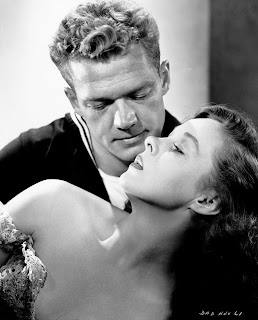
            The young man is a sailor named Alex. He is on twenty-four hour leave in New York City before he has to catch the six o’clock train to Norfolk. He meets a woman named Edna is a nightclub. She pumps the sailor full of alcohol to the point where he can only remember fixing her radio, she passed out on her bed, he wanted to be paid so he took some money from her, and after that he left and the next thing he knows he’s waking up on a newspaper stand. As Alex gets up to leave a wad of cash falls out of his pocket but he cannot remember why until sometime later.
            For some reason Alex goes to a dancehall where with a few tokens he can dance with girls. The girl who dances with him is June Goth. He sees the dance as a date and tells June practically his whole life story. June is tired and outrageously irritable she has been dancing with a man who pretty much stalks her and the heat outside and inside is intolerable. After the dance June invites Alex back to her place for some sandwiches where he tells her about the money. She tells him to bring the money back so he does but when they get there they find Edna dead on the floor and her desk all awry. Alex thinks he might have murdered Edna because after all he cannot remember what happened when he blacked out.  
            With the help of June and a very nice cab driver named Gus who was concerned there was something wrong, Alex is cleared of the murder just in time to catch his six o’clock bus. The murderer is someone you would not even think of.
            I was not really too thrilled with the characters except for June she seemed to be the only genuinely tough character in the whole film. Alex was too much of a baby and June pointed that out several times and that is basically everyone else treated him. He was a naïve young man who got played in part of a game by a cold hearted woman and her brother. When I watch a Noir I want to see a tough guy with the weight of the world on his shoulders who meets a feisty gal willing to help him and that is most definitely the characters in Deadline at Dawn.
            As I said June was the only character who seemed to be tough throughout the whole film. Susan Hayward gets top billing and totally deserves it. Hayward was fabulous. The more I see her in films the more I adore. She was perfect as June she really had a tough, feisty edge to her and she pulled all the softer, weaker characters together. Hayward was given some great dialogue which she said wonderfully with the greatest amount of sarcasm: while at the dancehall Alex asks her what she wanted to do when she was twelve years old and she replied “Marry John Barrymore” and the other line was when Alex tells her he believes he stole the money she replies “Let us pause for station identification: you stole the money?” Another very good scene from Hayward comes when June talks to a woman who might be involved with the murder. The woman goes to grab and hit June but June fights off the woman and gets really tough with her. That was one of my favorite performances from Hayward it was a perfect bit of tough acting from her.
            The script I felt was alright it was too wordy. Clifford Odets who was a famous playwright during the 1930s wrote the script. One aspect of his plays that carried over in the film was his use of characters that moviegoers could relate to. There is a girl struggling to make it on her own, a young sailor who enlisted after Pearl Harbor (this was made in 1942), a cab driver who has had a hard life. I did not, however, like when he softened June by making her question love and falling in love with Alex. He was used to writing for the stage and it shows. Also the director Harold Clurman was a stage director and at times some scenes make that clear (this would be the only film he would ever direct).
            The suspense was very good even if the acting was not all there. The real suspense came from the irritability of the characters from the heat. The heat was inescapable everyone was on edge and even the murder was committed because of it.
            Deadline at Dawn is not one of the greatest Noir films but it does have some good character moments and I have to admit the twist at the end where we find out who the murderer is was really surprising. The plot is very typical of the genre but the characters besides June I found to be not strong enough or good enough for story. With its faults in character and dialogue Deadline at Dawn is a good film and one worth watching.

Friday, June 10, 2011

Blood Money (1933)


“You know, people outgrow each other just like they outgrow clothes.”

            If I had a chance to go to film school to study film history and had to pick a specific period for films I would pick the 1930s because of the Pre-code years and the screwball comedies. Pre-code Hollywood came out with some of the greatest films such as King Kong, A Free Soul, The Divorcee, Three on a Match, Taxi, Public Enemy, Night Nurse, It Happened One Night and many, many more. If looked at in a historical context these films are risqué and intriguing, wild and sexy. Blood Money is one such intriguing film to come out of the pre-code era. Not one character has a redeeming quality they are all seedy individuals who in many ways are just out for themselves and do not care if their actions hurt/ruin anyone else.
            Bill Bailey is a former, disgraced cop turned bail bondsman. Everyone goes to them for help with most of his clients being corrupt, underground criminals. He has a girl named Ruby but he does not seem to commit fully to her. It is almost as if he takes advantage of having her in his life. Ruby runs a gambling house. Her brother Drury is in and out of trouble. Drury just gets out of jail from a previous crime and he goes and robs a bank. His bail has been set at $50,000.
            One day a young woman gets arrested for shoplifting. She has the money to get out so she goes to Bill to set the bail. She goes by the name of Jane Smith so she will not have to give her real name but Bill finds out her name when he has the phone she calls her home from tapped. He learns her name is Elaine Talbart and she is a society girl. He manages to get the charges brought against Elaine dropped and he begins falling for her. Elaine is a spoiled society girl looking for any thrill she can find to escape her boring life. At a party Elaine’s father tells Bill she has underworld mania she goes to gangster films and reads detective stories.
            Bill takes Elaine to a dog race where Drury also happens to be. From the moment she introduced to the bank robber Elaine is completely taken by him. Drury tells her he is the one that robbed the bank and her eyes go all wide with excitement and all she wants is for him to talk about himself and asks how he robbed the bank. Drury really likes Elaine and the two start seeing each other even though she is seeing Bill (she admits she does not like the bail bondsman that much).
            Drury needs to skip town now that the police are breathing down his neck. He proposes to Elaine and asks her to run away with him. She says she will because she sees it as something exciting and rule breaking. Once Bill hears that Drury has taken Elaine from him he gives Drury away to cops. Ruby sends the whole underworld after Bill. His life is now in danger.
            For an early sound film Blood Money is very well made and acted. Each actor left me feeling like I would never want to come into contact with these kinds of sleazy people in my life. George Bancroft I have never seen in a film before. I did not find him particularly interesting but I did not find the character that interesting either. This was Judith Anderson’s first film. I think this was the first time I have seen Anderson in a film where I did not have a hard time seeing her as just Mrs. Danvers. She was very good in this role. Chick Chandler I have never even heard of before this. He was good as well. Look very closely at one of the two ladies he brings to the racetrack because she is a very young Lucille Ball.
 
            Now the whole reason I even looked for and found Blood Money was to see Frances Dee. Dee is reason alone to sit through this film her character of Elaine Talbart is one of the most interesting female characters I have seen in a film especially one from the 30s. Elaine is a sexual masochist. She tells Bill without batting an eye that she wants a man “who could be my master and give me a good thrashing.” She gets so turned on by violence and crime. Of all the films I have seen Dee in this is my favorite of her performances. She always played the good girl and here to see her eyes glaze over in excitement at the mention of violence and crime is a bit of a shock. Watching Dee when her character gets excited about being hit or about breaking the law it is almost as if she was not acting all you can believe she is her sadomasochistic character. Her best scene was at the end of the film when she runs into another young woman who has been crying. She asks the girl what is wrong and the girl tells her that she has just come from being beaten by an artist who was looking for a model to pose for him. The girl is clearly shaken with a bruised arm and chin. Elaine gets a wild, very turned on look in her eyes; she grabs the paper with the ad for a model and heads upstairs to the artist gladly looking forward to her “thrashing.” Frances Dee does not have many parts in the film but she certainly steals it with her acting of this disturbed character and her utter beauty (I dare you to sit through this film and not think this woman is gorgeous). Although this is a pre-code and many years before Film Noir was to make an appearance Elaine Talbart is probably what the femme fatales of the genre would have been had there not been a strict moral code.
            Blood Money is a pre-code through and through. Bill gets away clean without being thrown in jail or killed for his sins and Elaine goes unpunished for her sexual ways. There is even some bellybutton action going on with some hula dancers! The story is pretty good not one of the best ever but it is more about the characters and their actions/motives than anything else. Blood Money is a film you might feel honored seeing because it is not very well known and not really widely available.
            The film is now currently available to view on Youtube which I highly suggest going to the site and watching it as soon as possible just in case it gets taken off. If you want to call yourself a true film buff, watch Blood Money.